It was an honour meeting Eric Sohl when he interviewed me for his book: From Cape to Karoo.
Updated: Dec 20, 2025
When Eric reached out to interview me for his book, I have to admit Eric was right - I wasn't the easiest person to get in touch with - no reply for days! But I'm so glad we finally connected. He came to visit me at my sunny house and studio just off the main street in Prince Albert, and we had the most wonderful conversation.
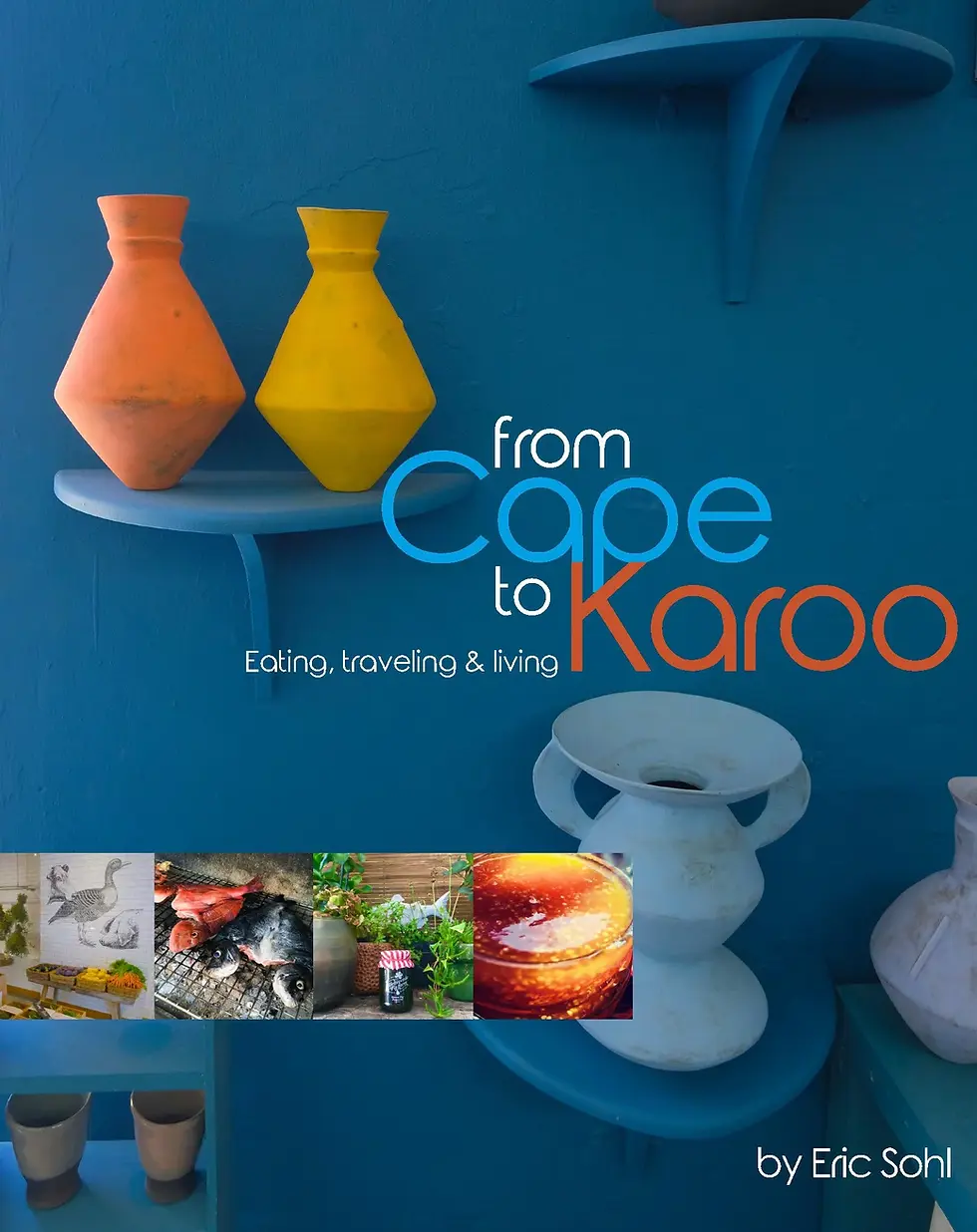
Eric is the creative heart behind Tasting and Living, a print publication is in the making, focusing on local food, foodie people, travel, botanics and flavours from the Cape Town area and further inland from the Karoo. The publication is available through the online shop, along with Eric's prints at https://www.tastingandliving.me/shop
We discussed my journey as a botanical artist - how I'm a South African born, internationally trained fine artist who studied at the Koninklijke Academie voor Schone Kunsten in Antwerpen, then art history in Munich and Frankfurt, before specializing in botanical art with the Society of Botanical Artists in the UK.
I shared with Eric how my childhood on an isolated Great Karoo sheep farm shaped everything. My mother's garden was an oasis of flowers, vegetables and trees - the magical terrain of our childhood adventures. I often drew in the dust with a stick. When we moved to Europe, homesickness for those family gardens led me to draw and paint flowers. The Orto botanico in Rome became a great source of inspiration, and I still seek out botanical gardens wherever I travel (Geneva is my favorite so far).
We talked about my artistic influences - Arcimboldo's vegetable paintings, the Dutch and Flemish Old Masters' still life works, and my personal favorites: Giovanna Garzoni, Maria Sibylla Merian, and Albrecht Dürer. Their realism and vibrant color compositions fascinate me.

Eric was curious about my relationship with food, which is deeply intertwined with my Karoo roots. I told him about the oddly named "Domestic Science" classes at my Karoo boarding school - only for girls while boys did woodwork - where we learned to make tapioca pudding. My mother's big Aga stove witnessed many failed meringue attempts during school holidays, using up a week's supply of fresh farm eggs with help from our cook Sarah.
My childhood food world revolved around Karoo lamb and rich Guernsey milk - our daily menu with boiled English-style garden vegetables. Hot porridge with thick Guernsey cream on icy Karoo mornings was delicious, as was the sour milk 'amasi' with leftover rice. I developed a passion for warm puddings made by another cook, Angelina - her sticky roly-poly pudding with apricot jam remains unforgettable.
As an art student in Cape Town, I discovered and fell in love with Cape Malay food - especially Bobotie made with lamb mince, sambals, and vegetable samosas that I can make really well.
I explained to Eric that living in Rome in the early 80s with my young family transformed my cooking. Using sign language at first, I learned from market women about extraordinary vegetables and herbs at the daily seasonal produce markets. My Italian vocabulary is still richest in food phrases, all acquired while learning to buy and cook through our quartiere's daily market. Those Roman market women remain my most important food inspiration.
Today, living in this remote, semi-arid Karoo village, I sometimes miss the fresh varied vegetables and fish, and especially those seasonal Italian markets. But Karoo lamb remains one of my favourites - the cleanest, most sustainable meat, in my opinion. My food heritage is a beautiful mix of Eastern Cape and Karoo farming recipes: my Grandma's triangular scones warm from the Aga with homemade Seville orange marmalade, Boerewors made according to my grandfather's recipe with only beef and lamb mince, herbs and coriander seeds, and of course game biltong and mutton.
I shared with Eric my dream dinner companion - Nelson Mandela, drinking 'amasi' from a calabash. He was also born in the Eastern Cape, though long before me. I still have my father's calabash, prepared from a large dried gourd and cured by our Xhosa family cook. Fermented, unpasteurised Guernsey milk kept cold is both the best thirst quencher and very healthy.
We talked about my culinary aspirations - I've not yet secured a table at Wolfgat restaurant on the West Coast - but my best food experience was at restaurant Fyn in Cape Town, with its incredible synthesis of African and Japanese flavours and sensational view of Table Mountain. I adore Japanese food - my next big love after Italian food and Karoo lamb.
And always: fresh oysters sustainably harvested off the rocks at my sister's beach house.
To read the full interview and explore more stories like mine, visit Eric's shop at https://www.tastingandliving.me/shop

Comments